
Origin and purpose of the Galicia Fiddle Cultural Association
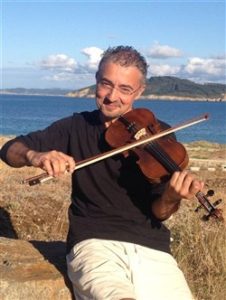 Galicia Fiddle has been organizing courses and meetings around traditional music since 2012, the year the association was founded.
since then, and thanks to the passion, effort and dedication of the associated people, and above all to the work that has been carried out in an altruistic and voluntary way by teachers, non-formal education professionals and again volunteers, who contribute their time and resources. materials, it has been possible over the years to turn the work of our association into a point of reference for the dissemination of traditional Galician music within the folk music field, at regional, national and international level. Thanks to this work, we have organized activities with some of the best professionals in the world of folk music, professionals who have generously committed themselves to collaborating with the project, thus promoting its impact and dissemination at an international level.
Over the years, a large network of students (of different ages and technical levels), musicians and teachers has been created, but we are working to consolidate all this work into a stable structure.
Our main goal was to create a new generation of violinists and cellists of popular music in Galicia, promoting the use of stringed instruments in an alternative way, with an innovative pedagogy and working with the best teachers in the world. For this we promote the use of different styles, favoring the development of skills not enhanced by classical training, approaching other cultures through the interpretation of traditional or popular music.
Secondly, but of great importance, is the achievement of a second objective: to promote and give access to all citizens to the knowledge of an instrument traditionally linked only to a few, the violin, through non-formal and alternative education methods. education, thereby achieving its dissemination and promoting knowledge, respect and conservation of traditions and the transmission of the values associated with them. In addition, our work can become an opportunity for groups at risk of exclusion or risk of vulnerability, an alternative of quality leisure, improvement of social cohesion, equal opportunities, coexistence between different cultures and environmental sustainability.
Ultimately, the creation of an active community that works against inequalities.
Our Values
-
- Know, understand and appreciate the different manifestations of the cultural environment.
- Use music as a tool for peaceful coexistence, empathy, solidarity, and for training in values
- Develop creativity, research, critical spirit, humanistic, social and artistic capacity
- Respect the values and traditions of other cultures.
- Promote connection, affection, resilience and facilitate moments of learning in an environment of happiness, respect and tolerance.
WHAT IS A FIDDLE?
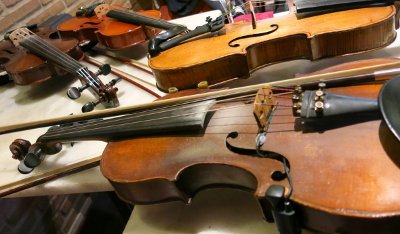
Fiddle is the name used internationally to define the violin used to interpret roots music: traditional, bluegrass, folk, Celtic, gypsy, etc. Despite the fact that it is the same instrument, the peculiar way of performing the popular music of each territory distinguishes it from the violin commonly used to perform “cultured” music and that is why in countries where the violin is strongly rooted in tradition : Ireland, Norway, Canada, etc. use the two words to differentiate one type of interpreter from another.
To give an example known to all: The fiddler on the roof was translated into galician language as “o violinista no tellado”, when in reality it is a musician of popular music and that is why in the original title they use fiddle and not violin.
A bit of recent history
For a few years now, we have been seeing how the traditional and folk violin was slowly making its way into the musical landscape. Increasingly, you can see more groups that incorporate the violin into their band: Sueño de Morfeo, Mago de Oz, Insite, etc.
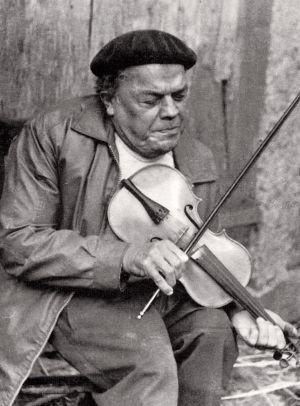
For centuries, Galicia has had an important violinist tradition based on the blind couplet singers, who with their violin both accompanied the story of the bloodiest news, and made an entire village dance. With the creation of ONCE, this trade gradually disappeared and with it the tradition of the popular violin. Fortunately, audio and video recordings of the last of the traditional violinists: “Florencio dos Vilares” have been left for posterity, thanks to which we know his way of interpreting traditional music.
Folk is born
Just when the last link of tradition was disappearing, a new musical style emerged in Galicia that would bring rural music to the cities: folk music.
In the eighties, with the appearance of this, a handful of violinists emerged who, integrated into different groups, managed to keep the violin present in our music. With the exception of Pancho Álvarez’s album dedicated to “Florencio dos Vilares”, nothing of particular relevance will take place in the last decade of the 20th century.
The revival of the 21st century
With the arrival of Sondeseu in 2001 we can hear for the first time several folk violinists playing together. This takes place thanks to the commitment that the Council of Vigo makes through its conservatory of traditional music, where first Quim Fariña (Berrogüetto) and later Alfonso Franco begin to teach, for the first time in the entire Peninsula, folk violin lessons.
In the last 5 years the activity related to the folk violin is growing exponentially: Begoña Riobó published his first self-titled album; Gutier Álvarez started teaching at Central Folque de Compostela, Tonecho Castelo in Coruña, and in Lugo the “Florencio Project”, directed by Germán Díaz, pays tribute to the “Cego da Fontaneira”.
In Vigo, a group of professors and students from ETRAD, through self-management, managed to organize during the last two years in a small village called Jústáns, a series of specialized violin courses with some of the best fiddlers in the world: among them Jany Lang (Hungary) , Laura Cortese (Boston), Bruce McGregor (Scotland) or Scott Hartley (UK). This coming and going of great masters is causing an increasing number of violinists to be attracted to alternative styles.
National circuit
In addition, the initiative of this group of fiddlers, associated under the name “GALICIA FIDDLE Cultural Association”, maintains an excellent relationship with the two most prestigious alternative violinists in Spain: Diego Galaz and Oriol Saña, from Barcelona, and with whom after their paso por terras galegas are designing a circuit at state level that will allow them in the coming years to continue bringing teachers of such a high level despite the difficult situation that the world of education and culture is going through.